sexta-feira, 25 de novembro de 2016

Relatório sobre a Riqueza Global do Credit Suisse. 0,7% detém 50% do PIB Global e Continua Aumentando Poder.


Os ricos estão ficando mais ricos e os pobres mais pobres. É o que diz o relatório do Credit Suisse sobre a riqueza global.

O relatório pode ser acessado clicando aqui.

0,7% da população mundial detém quase 50% da riqueza do mundo. Os outros 99,3% ficam com o resto.

Vejam o relato feito pelo site Zero Hedge, que traz mais informações sobre  a desigualdade de renda global:

Half Of The Population Of The World Is Dirt Poor - And The Global Elite Want To Keep It That Way


Could you survive on just $2.50 a day?  According to Compassion International, approximately half of the population of the entire planet currently lives on $2.50 a day or less.  Meanwhile, those hoarding wealth at the very top of the global pyramid are rapidly becoming a lot wealthier.  Don’t get me wrong – I am a very big believer in working hard and contributing something of value to society, and those that work the hardest and contribute the most should be able to reap the rewards.  In this article I am in no way, shape or form criticizing true capitalism, because if true capitalism were actually being practiced all over the planet we would have far, far less poverty today.  Instead, our planet is dominated by a heavily socialized debt-based central banking system that systematically transfers wealth from hard working ordinary citizens to the global elite.  Those at the very top of the pyramid know that they are impoverishing everyone else, and they very much intend to keep it that way.
Let’s start with some of the hard numbers.  According to Zero Hedge, Credit Suisse had just released their yearly report on global wealth, and it shows that 45.6 percent of all the wealth in the world is controlled by just 0.7 percent of the people…
As Credit Suisse tantalizingly shows year after year, the number of people who control just shy of a majority of global net worth, or 45.6% of the roughly $255 trillion in household wealth, is declining progressively relative to the total population of the world, and in 2016 the number of people who are worth more than $1 million was just 33 million, roughly 0.7% of the world’s population of adults. On the other end of the pyramid, some 3.5 billion adults had a net worth of less than $10,000, accounting for just about $6 trillion in household wealth.
And since this is a yearly report, we can go back and see how things have changed over time.  When Zero Hedge did this, it was discovered that the wealth of those at the very top “has nearly doubled” over the past six years, and meanwhile the poor have gotten even poorer…
Incidentally, we tracked down the first Credit Suisse report we found in this series from 2010, where the total wealth of the top “layer” in the pyramid was a modest $69.2 trillion for the world’s millionaires. It has nearly doubled in the 6 years since then. Meanwhile, the world’s poorest have gotten, you got it, poorer, as those adults who were worth less than $10,000 in 2010 had a combined net worth of $8.2 trillion, a number which has since declined to $6.1 trillion in 2016 despite a half a billion increase in the sample size.
If these trends continue at this pace, it won’t be too long before the global elite have virtually all of the wealth and the rest of us have virtually nothing.
Perhaps you are fortunate enough to still have a good job, and you live in a large home and you will sleep in a warm bed tonight.
Well, you should consider yourself to be very blessed, because that is definitely not the case for most of the rest of the world.  The following 11 facts about global poverty come from dosomething.com, and I want you to really let these numbers sink in for a moment…
  1. Nearly 1/2 of the world’s population — more than 3 billion people — live on less than $2.50 a day. More than 1.3 billion live in extreme poverty — less than $1.25 a day.
  2. 1 billion children worldwide are living in poverty. According to UNICEF, 22,000 children die each day due to poverty.
  3. 805 million people worldwide do not have enough food to eat. Food banks are especially important in providing food for people that can’t afford it themselves. Run a food drive outside your local grocery store so people in your community have enough to eat. Sign up for Supermarket Stakeout.
  4. More than 750 million people lack adequate access to clean drinking water. Diarrhea caused by inadequate drinking water, sanitation, and hand hygiene kills an estimated 842,000 people every year globally, or approximately 2,300 people per day.
  5. In 2011, 165 million children under the age 5 were stunted (reduced rate of growth and development) due to chronic malnutrition.
  6. Preventable diseases like diarrhea and pneumonia take the lives of 2 million children a year who are too poor to afford proper treatment.
  7. As of 2013, 21.8 million children under 1 year of age worldwide had not received the three recommended doses of vaccine against diphtheria, tetanus and pertussis.
  8. 1/4 of all humans live without electricity — approximately 1.6 billion people.
  9. 80% of the world population lives on less than $10 a day.
  10. Oxfam estimates that it would take $60 billion annually to end extreme global poverty–that’s less than 1/4 the income of the top 100 richest billionaires.
  11. The World Food Programme says, “The poor are hungry and their hunger traps them in poverty.” Hunger is the number one cause of death in the world, killing more than HIV/AIDS, malaria, and tuberculosis combined.
So how did we get here?
Debt is the primary mechanism that takes wealth from ordinary people like you and me and puts it into the hands of the global elite.
In my recent article entitled “Why Donald Trump Must Shut Down The Federal Reserve And Start Issuing Debt-Free Money“, I discussed how the Federal Reserve was designed to entrap the U.S. government in an endless debt spiral from which it could never possibly escape.  And that is precisely what has happened, as the U.S. national debt has gotten more than 5000 times larger since the Federal Reserve was created in 1913.
In that very same year, the federal income tax was instituted, and that is a key part of the program for the global elite.  You see, the income tax is how wealth is transferred from us to the government.  And then a continuously growing national debt is how that wealth is transferred from the government to the elite.
It is a very complicated system, but at the end of the day it is all about taking money from us and getting it into their pockets.
And at this point more than 99.9 percent of the population of the world lives in a country with a central bank, and almost every nation on the planet has some form of income tax.
It is a global system that is designed to create as much debt as possible, and I recently shared with my readers that the total amount of debt in the world has hit a staggering all-time record high of 152 trillion dollars.
The borrower is the servant of the lender, and the global elite have used various forms of debt to turn the rest of the planet into their debt slaves.
As debt levels race higher and higher all over the planet, the elite are using the magic of compound interest to grab a bigger and bigger share of the pie.
Given enough time, those at the very top would have virtually everything and the rest of us would have virtually nothing.  The middle class is shrinking all over the globe, and the gap between the wealthy and the poor continues to grow at an astounding pace.
But the vast majority of people out there have no idea how money, debt, taxes and central banks really work, and so they have no idea that this is purposely being done to them.
The truth is that we don’t have to have this much global poverty, and if we correctly identify the root causes of this poverty we can start working on some real solutions.

terça-feira, 22 de novembro de 2016

Meu Livro sobre Guerra Justa foi Publicado.


Caros, tenho o imenso prazer em anunciar que o meu livro "Teoria e Tradição da Guerra Justa: Do Império Romano ao Estado Islâmico" está disponível para venda, no site da editora Vide Editorial.

Os amigos do blog, há algum tempo que sabem que eu estava escrevendo esse livro e esperavam pela publicação.

Gostaria de deixar meu agradecimento ao editor Diogo Chiuso, que apostou em meu trabalho. E também ao amigo Redel Neres, o primeiro que leu e sugeriu correções gramaticais.

Acho que pode ser bem útil para quem quer saber o que santos, teólogos, papas e renomados escritores (como Dante, Cervantes, Chesterton, Benson e Belloc) escreveram e pensaram sobre guerra.

Se me for perguntado sobre qual é a maior qualidade do livro, eu diria que é justamente o amplo uso de fontes. Eu não conheço nenhum livro sobre guerra justa que tenha considerado tantas citações bíblicas, tantos santos, teólogos e escritores renomados.

O livro, inclusive, é o primeiro destaque do site da editora hoje.


Espero que gostem.

Comprem. Presenteie o livro no Natal.

Abaixo vai parte da Introdução e da conclusão.


       Nos dias de hoje, pacifismo é geralmente associado a uma posição radical contra guerras, que é própria do que se chama de movimento hippie. Se a pergunta implica pacifismo nesse sentido, a resposta é negativa. A “Paz de Cristo” não se confunde com o antimilitarismo dos hippies, assim como o amor de Cristo não se confunde com o “free love” da liberdade sexual propagada por eles. O próprio Cristo esclareceu isso ao distinguir claramente a paz dele da paz do mundo, quando disse a seus discípulos: “Deixo-lhes a paz; a minha paz lhes dou. Não a dou como o mundo a dá” (João 14,27).
Mas alguns podem imaginar que a resposta para a pergunta acima deveria ser afirmativa, uma vez que desde 1965 quando o Papa Paulo VI disse na Assembleia Geral da ONU: “Guerra nunca mais, nunca mais guerra”, usando como base um discurso do presidente americano John Kennedy (que não é renomado por seu pacifismo durante seu mandato), os papas seguintes mencionam o mesmo apelo: “Guerra nunca mais”. Certamente este apelo faria parte de uma manifestação hippie. Também pode-se considerar as várias vezes que papas pediram o banimento total das armas nucleares ou fim do comércio de armas....
A teoria da guerra justa é altamente valorizada no meio acadêmico e mesmo no meio político, mesmo por aqueles líderes que não são conhecidos por seguir os preceitos dessa teoria. Por exemplo, o presidente Obama, que continuou as guerras de seu antecessor e usa aeronaves não tripuladas (drones) para matar terroristas que por vezes também matam civis, quando recebeu o Prêmio Nobel da Paz, no seu primeiro ano de mandato, fez elogios aos preceitos da teoria da guerra justa cristã. Ele reconheceu a importância do conceito de guerra justa “feita por filósofos, clérigos e homens de estado”, que estabeleceu os critérios para se fazer guerra e mencionou parte desses critérios. E ainda falou, com pesar, que esses critérios não são observados muitas vezes.
No meio acadêmico é muito comum observar exaltações à teoria da guerra justa. Coates (1997) afirmou que a tradição da guerra justa não é apenas uma tradição entre muitas, ela é a tradição dominante intelectualmente quando se trata de moralidade da guerra. Segundo ele, a guerra justa cristã tem monopolizado o debate sobre a moral de guerras, pelo menos no que diz respeito ao Ocidente. Russell (1975) declarou que a guerra justa apresenta um conjunto de premissas e suposições que são correlacionadas e formam uma importante parte da história política e intelectual da civilização ocidental. Corey e Charles (2012) argumentaram que a tradição da guerra justa é a única estrutura que oferece uma linguagem rica, um conjunto de categorias e conceitos desenvolvidos em séculos de reflexão, no qual a moralidade da guerra deve ser examinada. 
A abordagem da guerra justa também é popular....

---
Tratamos aqui da doutrina da Igreja Católica sobre guerra justa, desde a Bíblia até o Papa Francisco, desde os tempos do Império Romano até os ataques terroristas do Estado Islâmico, passando pela posição de diversos teólogos e doutores da Igreja, pelo Catecismo, pelas declarações da Santa Sé na ONU, pelos pensamentos de alguns estudiosos modernos e até por sobre o que ilustres escritores católicos, Dante, Cervantes, Benson, Chesterton e Hilaire Belloc, escreveram sobre o assunto. 

quinta-feira, 10 de novembro de 2016

Pessoas Especialmente Felizes com a Vitória de Trump: Mulheres Vítimas de Bill Clinton, Cristãos e Soldados Vítimas de Hillary


Trump ganhou em 80% do território dos Estados Unidos, têm estados em que nenhuma cidade votou pela Hillary. Mas não adianta, os jornais do mundo hoje mostram que não aprenderam nada, dando destaque para pequenos grupos de insatisfeitos com a vitória do Trump como se esses grupos representassem o povo, da mesma forma que no Brasil se trata a UNE como se fosse "os estudantes".

Que tal a gente vê a satisfação de pessoas que têm todas razões do mundo de estarem felizes com a vitória do Trump?

Essas pessoas são as vítimas de estupro de Bill Clinto, como Juanita Broaddrick


A vítima de um pedófilo, que ficou livre da prisão com a ajuda da advogada Hillary Clinton (falei sobre isso no meu outro blog), Kathy Shelton.


Vítimas do ataque terrorista de 11 de setembro de 2011 em Benghazi na Líbia que foram abandonadas por Hillary Clinton (que era secretária de Estado) e por Obama.


Cristãos coptas que forama abandonados por Hillary e Obama, durante o avanço da Irmandade Muçulmana.


Os haitianos que sofreram com a corrpução da Fundação Clinton.


(Agradeço às imagens ao site Weasel Zippers)

segunda-feira, 7 de novembro de 2016

Economia: Católicos vs Libertários.


O site do The Dustributive Review traz um ótimo texto do grande Thomas Storck sobre a relação entre catolicos e os libertários (defensores exaltados de Adam Smith e Ludwig von Mises).

Leiam o texto abaixo:

CATHOLICS AND LIBERTARIAN ECONOMICS: A REPLY TO SAMUEL GREGG
November 7, 2016
Recently on the website Public Discourse of the Witherspoon Institute, Samuel Gregg of the Acton Institute had an article called “Markets, Catholicism, and Libertarianism.”Gregg begins by noting that there are many who have criticized Catholics, such as himself, who “regard markets as the most optimal set of economic conditions,” on the grounds that they “are effectively promoting libertarian philosophy.” But, Gregg goes on to claim, “a favorable assessment of markets and market economics need not be premised on acceptance of libertarianism in any of its many forms.” In other words, according to him, one can accept an approach to economics propagated by libertarian thinkers while at the same time disagreeing with the fundamental philosophical approach of those same thinkers.

Before dealing with the substance of Gregg’s argument, let me note two preliminary points. In the first place there is Gregg’s use of the terms market or market economy as apparent synonyms for free-market. This usage, though not uncommon, tends to prejudice the argument in that it suggests that market necessarily means free-market, and that the only alternative to a free-market is a non-market, Soviet-style command economy. In fact, markets can be of varying types and can make use of different methods of exchange of goods for goods, or money for goods, and, in fact it was medieval markets, where prices were often set by custom or regulated by guilds or civil authorities, that served as the backdrop for the idea of a market in the development of economic thought. Practically any type of economy will include some exchange of goods, so one should be aware that a rejection of free competition as the guiding force of market exchange need not equate to a rejection of markets as such.

The second point is more important. This is that, in discussing the Church’s position on economic morality, Gregg instances only the statements of Pope Francis in opposition to libertarian ideas. He never gives a hint that it is not only Francis who has been critical of a free-market or neoliberal approach to conducting an economy, but every pope who has touched on the matter since at least Leo XIII, including St. John Paul II in his much misunderstood encyclical Centesimus Annus, about which there exists so much misinformation and, dare I say, disinformation. But Gregg probably assumes that the vast majority of his readers have no idea of the teachings of prior popes on morality in economic activity; that, for example, Pope Pius XI in his 1931 encyclical Quadragesimo Annowrote that “the proper ordering of economic affairs cannot be left to the free play of rugged competition” and that “Free competition, however, though justified and quite useful within certain limits, cannot be an adequate controlling principle in economic affairs.” By limiting his attention to Francis, Gregg can make it appear that it is merely the recent ideas of a quirky or even aberrant pontiff that he is differing with. Thus Gregg writes that “criticizing aspects of Pope Francis’s statements about economic questions doesn’t necessarily mean that you’re trying to promote libertarianism,” but it would not sound quite the same had he instead written something such as, ‘criticizing the explicit statements of numerous popes doesn’t necessarily mean that you’re trying to promote libertarianism.’ Gregg has framed the question as a conflict between Pope Francis and libertarian thought, whereas it is really a conflict between Catholic teaching and libertarian thought.

As to the substance of his article, Gregg admits that the chief free-market economic writers, from Adam Smith to Ludwig von Mises, generally had very suspect philosophical foundations for their thinking, such as David Hume or the utilitarianism of Bentham or Mill. But none of this need matter, he avers.

TENSIONS IN SMITH’S ETHICAL THEORY, HOWEVER, DON’T INVALIDATE THE KEY ECONOMIC INSIGHTS EXPRESSED IN HIS WEALTH OF NATIONS (1776). SMITH’S SYSTEMATIC OUTLINE OF BASIC STAPLES OF ECONOMIC ANALYSIS—THE DIVISION OF LABOR, INCENTIVES, TRADE-OFFS, MUTUALLY BENEFICIAL EXCHANGE, UNINTENDED CONSEQUENCES, COMPARATIVE ADVANTAGE, ETC.—DON’T DEMAND HIS READER’S ASSENT TO NEO-HUMEAN ACCOUNTS OF HUMAN ACTION.

But this is not the case. In dealing with the multifarious economic activities of mankind it is clearly necessary to find some organizing principle or principles. Thus Smith necessarily begins with certain fundamental ideas which define and frame his economic analysis. But as I have shown here, here and here, his starting points are by no means necessary or obvious. Do we begin our analysis of economics by positing scarcity and everyone’s supposed desire for unlimited individual fulfillment, or do we begin by recognizing the bounty which God has provided the human race, and the relationship that economic goods should have to an ordered human life? Do we recognize that the Fall of our first parents has affected our appetites for external goods just as much as our appetite for sexual pleasure, and that a free-market or free competition is much like free sex or free love, in that both regard the appetites of fallen mankind as fundamental axioms of human behavior.

Moreover, it could hardly be the case that the well-known free-market economists created a body of economic thought independent of their philosophical presuppositions. Rather, their basic philosophical positions determined their approach to economics, which indeed is what one would expect. Theorists who are in any way consistent in their thinking necessarily base their economic ideas on their core philosophical positions. But if their fundamental philosophies are erroneous, as even Gregg admits to be the case, how is it that they created a body of economic thought untouched by those errors?
In 1971 Pope Paul VI in his apostolic letter Octogesima Adveniens (no. 35) commented on the revival of classical liberal ideology and the dangers that it holds for Catholics.

ON ANOTHER SIDE, WE ARE WITNESSING A RENEWAL OF THE LIBERAL IDEOLOGY. THIS CURRENT ASSERTS ITSELF BOTH IN THE NAME OF ECONOMIC EFFICIENCY, AND FOR THE DEFENCE OF THE INDIVIDUAL AGAINST THE INCREASINGLY OVERWHELMING HOLD OF ORGANIZATIONS, AND AS A REACTION AGAINST THE TOTALITARIAN TENDENCIES OF POLITICAL POWERS. CERTAINLY, PERSONAL INITIATIVE MUST BE MAINTAINED AND DEVELOPED. BUT DO NOT CHRISTIANS WHO TAKE THIS PATH TEND TO IDEALIZE LIBERALISM IN THEIR TURN, MAKING IT A PROCLAMATION IN FAVOR OF FREEDOM? THEY WOULD LIKE A NEW MODEL, MORE ADAPTED TO PRESENT-DAY CONDITIONS, WHILE EASILY FORGETTING THAT AT THE VERY ROOT OF PHILOSOPHICAL LIBERALISM IS AN ERRONEOUS AFFIRMATION OF THE AUTONOMY OF THE INDIVIDUAL IN HIS ACTIVITY, HIS MOTIVATION AND THE EXERCISE OF HIS LIBERTY.

It is not for nothing that John Paul II wrote in Centesimus Annus that Leo XIII’s Rerum Novarum criticizes two social and economic systems: “socialism and liberalism”.1 The fundamental philosophical axioms of liberal thinkers are hardly a thing apart from their economic thought, and indeed color that thought, just as is the case with any other thinkers.

But there is another reason to object to Gregg’s thesis that a free-market approach to economics is acceptable for Catholics. This is the direct and explicit teaching of the popes, who in their teaching on economic morality have been clear that the libertarian approach to conducting economic activity is not compatible with Catholic teaching, that the economy needs more than the forces of competition as a sufficient regulating principle. One of the clearest statements of this is in the encyclical Quadragesimo Anno of Pius XI, who wrote,

JUST AS THE UNITY OF HUMAN SOCIETY CANNOT BE BUILT UPON “CLASS” CONFLICT, SO THE PROPER ORDERING OF ECONOMIC AFFAIRS CANNOT BE LEFT TO THE FREE PLAY OF RUGGED COMPETITION. FROM THIS SOURCE, AS FROM A POLLUTED SPRING, HAVE PROCEEDED ALL THE ERRORS OF THE “INDIVIDUALISTIC” SCHOOL. THIS SCHOOL, FORGETFUL OR IGNORANT OF THE SOCIAL AND MORAL ASPECTS OF ECONOMIC ACTIVITIES, REGARDED THESE AS COMPLETELY FREE AND IMMUNE FROM ANY INTERVENTION BY PUBLIC AUTHORITY, FOR THEY WOULD HAVE IN THE MARKET PLACE AND IN UNREGULATED COMPETITION A PRINCIPLE OF SELF-DIRECTION MORE SUITABLE FOR GUIDING THEM THAN ANY CREATED INTELLECT WHICH MIGHT INTERVENE.2

One could multiply similar statements many times over. Thus it is not the case that the only reason that a Catholic cannot accept libertarian economics is because of the erroneous metaphysical or ethical thinking of a Smith, a Mill or a Mises, but because of a clear conflict between the classical liberal and the Catholic understandings of how an economy ought to be conducted. As Pius XI noted, “the Encyclical Rerum Novarumcompletely overthrew those tottering tenets of liberalism which had long hampered effective intervention by the government” (Quadragesimo Anno, no. 27). It is not simply a matter of rejecting the more obnoxious aspects of the thought of Adam Smith or Ludwig von Mises, but of the fact that classical Catholic thought, as expressed so often in papal writings, has always been at odds with classical liberal thought, whether this be in metaphysics, in political philosophy or in economic thought. This is and has been the consistent teaching of the Church and just as Catholic social thought is a substantial whole, so is classical liberalism.

The interest in social thought and policy by Catholics is a good thing. What is not good, however, and in fact is very sad, is that so many Catholics ignore or explain away the existing body of papal social doctrine, and instead take up one or another of the existing secular doctrines, such as classical liberalism. But just as the loss of Catholic identity has been so harmful to the Church in other areas so is it in this area. Catholics need to regain a sense of the importance of being Catholic and of thinking with the Church. Only in this way is there any hope of a revival of Catholic life and a resurgence of that Catholic spirit which aims at nothing less than a conversion of all peoples along with their cultures to Catholic truth.


sábado, 5 de novembro de 2016

Mercado Diz que Trump tem 86% de Ganhar


O site Zero Hedge diz que historicamente é possível prever as eleições presidenciais usando o mercado.

A regra é: se nos três últimos meses antes das eleições o mercado está em alta o partido que está no poder ganha. Se está em queda o desafiador ganha.

Essa regra só errou três vêzes desde 1928. Vejam tabela acima.

Por essa regra, Donald Trump tem 86% de chance de ganhar. O mercado caiu 4,5% nos últimos três meses, segundo o S&P 500.

O mercado hoje está muito perturbado, mas regra é regra. Vamos ver.

Vejam detalhes no site Zero Hedge.


quarta-feira, 5 de outubro de 2016

Você Acha que Existe Muita Gente no Mundo? Veja esses Mapas e Descubra que Não.


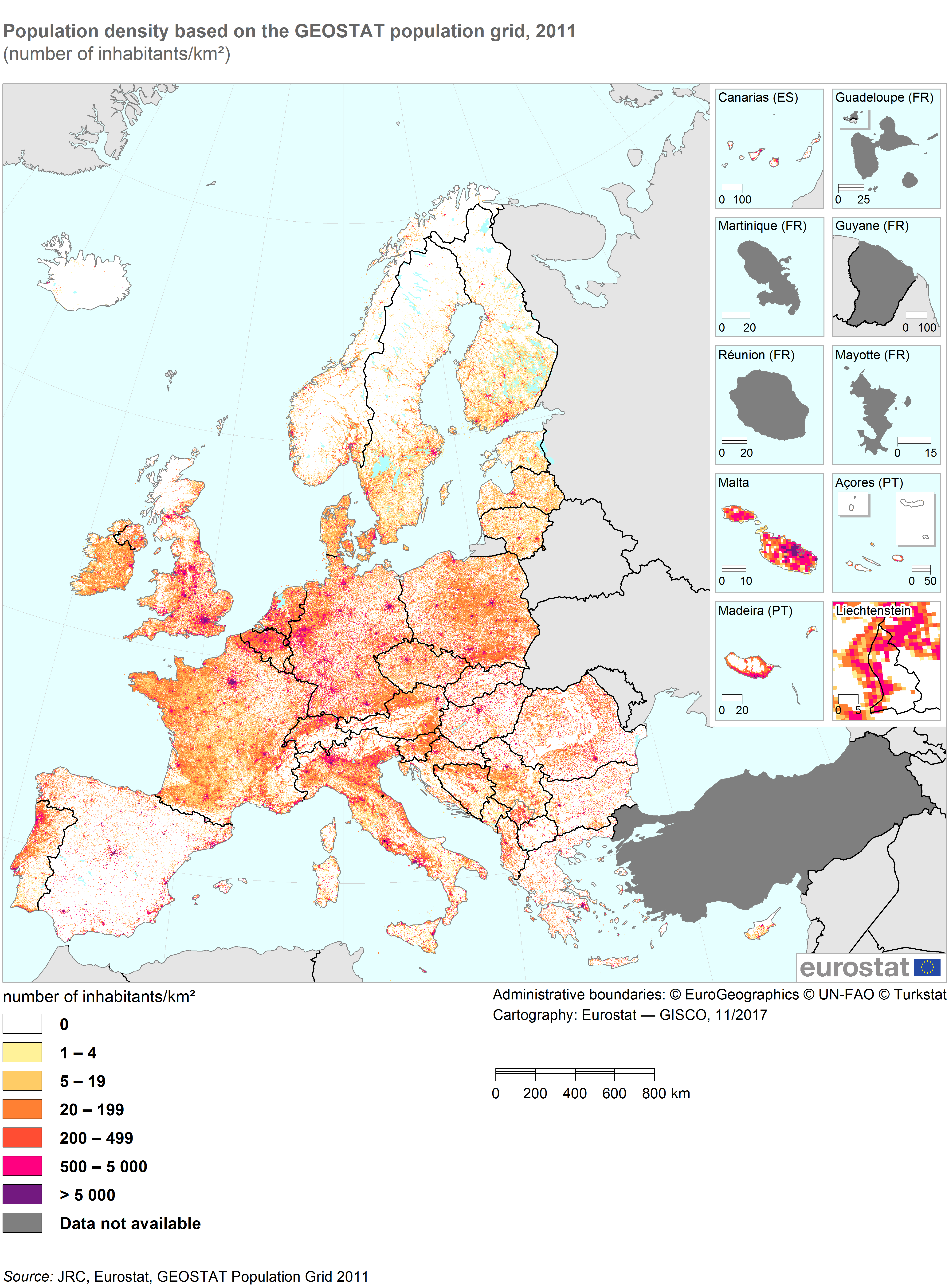
O mundo precisa urgente é de gete no campo. O distributismo defende que as pessoas devem ter suas próprias propriedades, em geral isso significa mais gente no campo. E o mundo precisa mesmo disso. Vejam os mapas abaixo, do World Economic Forum.

Italy

Based on data from NASA/SEDAC, this map shows how Italy’s population is distributed – half lives in the densely-packed purple areas (8% of the land), half lives in the sparse grey areas (92% of the land).
 Italy's population split in half
Image: metrocosm
The map is the latest addition to a long-running string of population maps tweeted out by Conrad Hackett, a Pew Research demographer with a very interesting and very popular Twitter feed. The maps show how and where people are concentrated in different regions of world, including contributions from some great data visualizers as well as a few of my own.
It’s no surprise that people are not evenly spread out across the Earth. But seeing the population concentrations mapped out visually can be quite striking.

The world

 The world's population split in half
Image: metrocosm
The map below shows the world’s population density from another perspective. Only 5% of the world lives in the entire blue area. For comparison, the same number of people live in the small red area (bonus points if you can name the two countries it covers).
 The world's population mapped
Image: metrocosm

Australia

Australia may be the country with the most extreme population concentration in the world. Physically, it is about the same size as the United States. But as this map by reddit user jnd-au shows, half of Australia’s 23 million people live in just a few densely packed specs.
 Australia's population mapped
Image: jnd-au

United States

This map of the United States was made by Jishai Evers of dadaviz, a site that put out some great data visualizations before being acquired by Vocativ late last year.
Of the United States’ 3,142 counties, just 144 account for half of the population.
 America's population mapped
Image: Jishai Evers, dadaviz.com

Spain

As you can see in the maps here, Western Europe’s population is distributed relatively evenly compared to the rest of the world. But Spain is a bit of anexception. 14% of Spaniards live in Greater Madrid, smack dab in the centre of the country.
 Spain's population mapped
Image: metrocosm

France

This map of France comes by way of Mathieu Dehlinger of francetvinfo. It shows not only the 50%/50% population split, but the full range of possible breakdowns.
 France's population mapped
Image: Mathieu Dehlinger, francetvinfo

North Africa

Unsurprisingly, the Sahara Desert has one of the lowest population densities on the planet. Nearly half the population of North Africa lives along the banks of the Nile River.
Image: metrocosm

Turkey

This map by Aron Strandberg shows the population concentration of Turkey. 50% of the population lives in the black regions, 50% lives in the yellow regions.
 Turkey's population mapped
Image: @aronstrandberg

Canada

The 49th parallel is traditionally thought of as the border between the US and Canada. Oddly, most Canadians live far below it. 50% of Canada’s populationlives in this red area, which is at about the same latitude as Oregon.
Image: metrocosm
You can find these and many other population density maps on Conrad’s Twitter feed. If you have any suggestions for other parts of the world whose population would be interesting to see visualized like the maps above, feel free to share your thoughts.